
When most people picture fire safety in a commercial building, they think of alarms, extinguishers and sprinklers, the systems designed to detect and fight a fire once it has started. Yet some of the most important protection in any building does nothing at all until the moment it is needed, and then quietly saves lives by holding a fire in place. This is the world of passive fire protection, and for commercial landlords, estate managers and designated Responsible Persons, understanding it is no longer optional. As specialists in building compliance across Hampshire, we see the consequences of overlooked passive protection all too often, and this guide sets out what every duty holder needs to know.
What Passive Fire Protection Actually Is
Passive protection refers to the built-in features of a building that contain a fire and slow its spread, without any human intervention or active triggering. Where active measures such as alarms and sprinklers respond to a fire, passive measures are engineered into the fabric of the building itself and work simply by being present and intact. Their job is to buy time: time for occupants to escape, and time for the fire and rescue service to respond.
The principle underpinning it all is compartmentation, the division of a building into fire-resisting compartments designed to keep a fire confined to the area where it starts. Fire doors are the most visible element, but they are only one part of a much larger system that includes fire-resisting walls and floors, fire stopping around service penetrations, cavity barriers, and protected structural steelwork. If any single element in that system is compromised, the whole compartment can be undermined.

The Key Elements Of A Passive Fire Protection System
An effective passive fire strategy relies on several components working together. During a survey we assess each of these, because a weakness in one can render the others ineffective:
- Compartment walls and floors: fire-resisting barriers that divide the building and must remain unbreached to contain a fire.
- Fire stopping: the sealing of gaps where pipes, cables and ducts pass through compartment walls and floors, using approved fire-resistant materials.
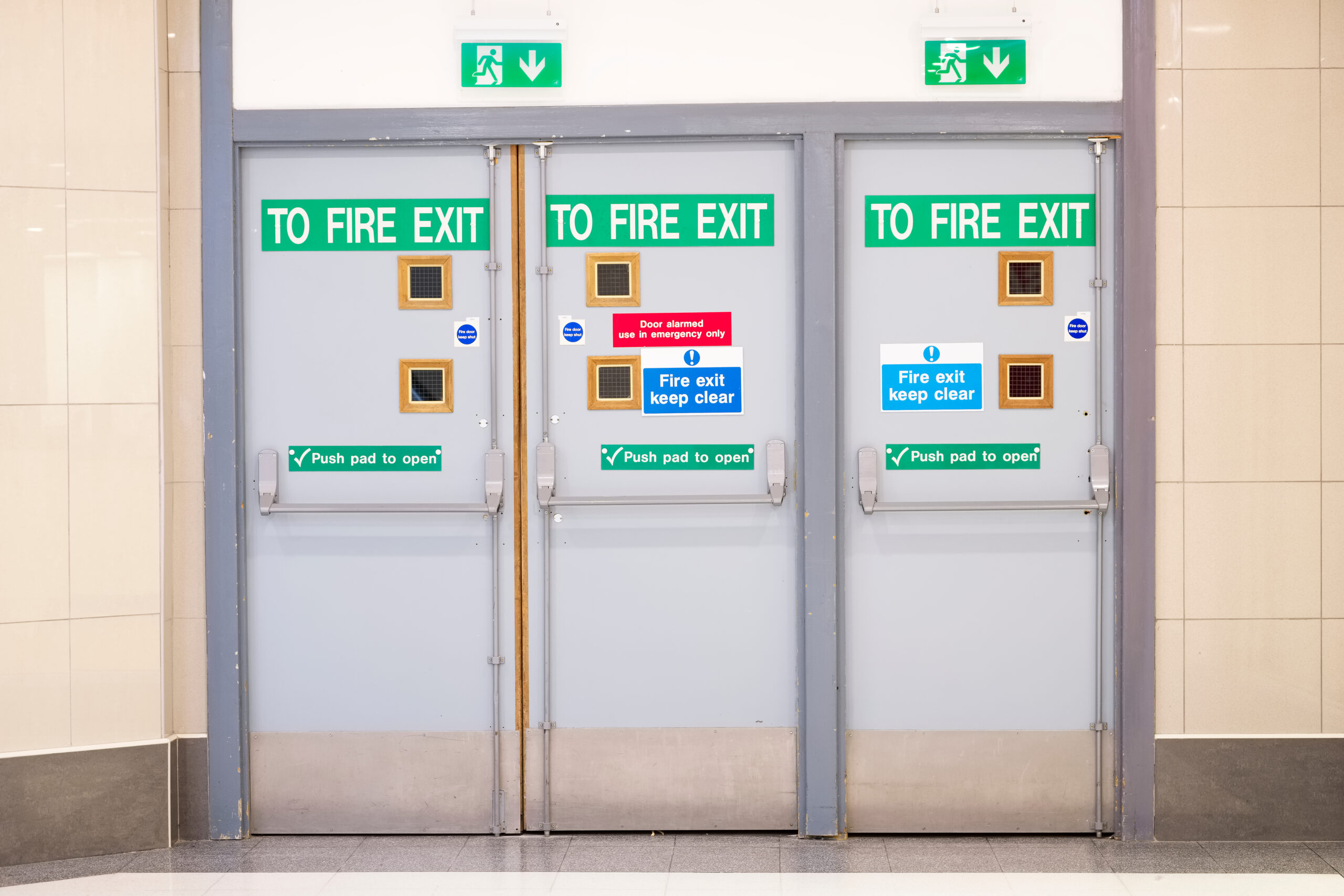
- Fire doors: engineered door sets that maintain compartmentation while allowing movement through the building.
- Cavity barriers: concealed barriers within voids, ceilings and walls that stop fire and smoke travelling unseen through hidden spaces.
- Structural fire protection: coatings and boarding that protect steel and other structural elements from failing in the heat.
The critical point is that these elements form a single, interconnected system. A perfect fire door achieves little if the wall beside it has an unsealed cable penetration, which is exactly why passive fire protection must be assessed holistically rather than element by element.
Why Fire Stopping Is So Often Overlooked
Of all the passive fire measures, fire stopping is the one most frequently found to be defective, precisely because it is largely hidden from view. Every time a contractor runs a new data cable, installs additional pipework, or alters a service route, they create a penetration through a compartment wall or floor. If that penetration is not correctly sealed with an approved fire stopping system, it becomes a direct path for fire and smoke to bypass the compartment boundary.
In an occupied commercial building, these breaches accumulate quietly over years of maintenance, refits and tenant changes, often carried out by different trades with no oversight of the fire strategy. The result is a building that looks compliant on the surface but is riddled with unrecorded breaches behind the ceilings and risers. A professional compartmentation survey is the only reliable way to uncover them, and it is one of the most valuable investments a duty holder can make.
The Legal Duty And The Golden Thread
The responsibility for passive fire protection sits firmly with the building’s Responsible Person under the Regulatory Reform (Fire Safety) Order 2005, reinforced by the Fire Safety Act and the Building Safety Act. These place a clear duty not only to ensure that adequate fire protection exists, but to maintain it and to document it. An undocumented repair, in the eyes of a regulator or an insurer, can be almost as problematic as no repair at all.
This is where the concept of the golden thread becomes central. Duty holders are increasingly expected to hold a continuous, accessible record of a building’s fire safety information, including the specification and condition of its passive fire measures. A thorough survey translates this legal obligation into a practical asset register, logging every compartment, penetration and defect so that remedial work can be prioritised, tracked and certified. It is this evidence trail that protects the Responsible Person when scrutiny comes.
From Survey To Accredited Remediation
Identifying defects is only the first half of the job. The real value of a passive fire survey is realised when the findings are turned into a prioritised, risk-based programme of remedial works, and when those works are carried out by accredited specialists who can formally certify them. Fire stopping and compartmentation are highly technical disciplines; the wrong material, or the right material incorrectly installed, provides a false sense of security that is arguably more dangerous than an obvious gap.
We provide a seamless route from inspection to accredited resolution, ensuring that every defect is addressed with the correct, tested products and documented to the standard that regulators and insurers demand. Attempting this work with general maintenance staff is a serious risk, because fire protection only performs if it is installed exactly as tested. Partnering with an accredited specialist gives the Responsible Person confidence that their statutory duties are genuinely met, not merely appear to be.
Frequently Asked Questions About Passive Fire Protection
What is the difference between passive and active fire protection?
Active fire protection detects and fights a fire, such as alarms, sprinklers and extinguishers, and requires triggering or intervention. Passive protection is built into the structure to contain a fire and slow its spread automatically, through measures such as compartmentation, fire doors and fire stopping.
How do I know if my building’s fire stopping is compliant?
The only reliable way is a professional compartmentation survey, which inspects service penetrations, voids and compartment boundaries that are usually hidden from view. Surface appearances can be misleading, so documented inspection is essential.
Who is responsible for passive fire protection in a commercial building?
The designated Responsible Person under fire safety legislation carries the duty to ensure fire protection is adequate, maintained and documented. This responsibility cannot be discharged simply by assuming the original build was compliant.
How often should passive fire measures be inspected?
Frequency depends on the building type, occupancy and level of alteration, but any significant maintenance, refit or change of tenant is a trigger for reassessment, as these are when compartment breaches are most often created.
Protect Your Building With Legacy GLM Group
Sound passive fire protection is one of the most important, and most frequently neglected, aspects of commercial building safety. Because so much of it is hidden, it is easy to assume all is well until an inspection, an insurance review, or worse, a fire, proves otherwise. A professional survey removes that uncertainty and gives you a clear, documented path to compliance.
At Legacy GLM Group, we provide passive fire surveys and accredited remedial works for commercial clients across Hampshire, backed by an unwavering commitment to excellence on every project we undertake. If you are responsible for a commercial building and want genuine confidence in its fire protection, get in touch with our team today.
Share This Post
About the Author: Legacy GLM Group

Quick Links
- What Passive Fire Protection Actually Is
- The Key Elements Of A Passive Fire Protection System
- Why Fire Stopping Is So Often Overlooked
- The Legal Duty And The Golden Thread
- From Survey To Accredited Remediation
- Frequently Asked Questions About Passive Fire Protection
- Protect Your Building With Legacy GLM Group